
Silver ETFs worth comparing include SLV, SIVR, PSLV, SIL, and SILJ.
Not all silver ETFs give you the same investment portfolio: some hold silver bullion, while others own shares in mining companies. Understanding that difference matters more than which ETF delivers the highest return.
If you want exposure to silver without keeping physical bars in a safe at home, exchange-traded products (ETFs) offer a convenient alternative. This guide compares five U.S.-listed options by investment approach, fees, and important trade-offs.
Note that “Top 5” is not an indication of performance or a promise that these investments will outperform.
What Are Silver ETFs?
An exchange-traded fund, or ETF, trades on a stock exchange through a brokerage account. In everyday conversation, investors often use “silver ETFs” to describe several exchange-traded silver investments, even when their legal structures differ.
For example, SLV is a bullion trust, while PSLV is a closed-end trust rather than a conventional ETF. Both provide exposure to physical silver, but their structures affect how they operate.
The key distinction is exposure:
- Physical silver products hold bullion and aim to reflect silver’s price, after expenses.
- Silver mining ETFs hold company shares, so their returns also depend on business performance.[ishares][aberdeeninvestments][globalxetfs][amplifyetfs]
In summary, buying a mining ETF isn’t simply another way of buying silver bars.
Top 5 Silver ETFs at a Glance
| Product | Ticker | Investment approach | Published annual fee |
|---|---|---|---|
| iShares Silver Trust | SLV | Physical silver bullion | 0.50% sponsor fee. [ishares] |
| abrdn Physical Silver Shares ETF | SIVR | Physical silver bullion | 0.30%, reflecting a voluntary fee waiver. [aberdeeninvestments] |
| Sprott Physical Silver Trust | PSLV | Fully allocated physical silver; closed-end trust | 0.52% management expense ratio. [sprott] |
| Global X Silver Miners ETF | SIL | Global silver mining companies | 0.65% total expense ratio. [globalxetfs] |
| Amplify Junior Silver Miners ETF | SILJ | Junior silver mining strategy | 0.69% total expense ratio. [amplifyetfs] |
Fees were checked on October 12, 2026. PSLV’s figure is an annualized expense measure for the period ended June 30, 2026, rather than a fixed sponsor fee. These figures exclude your brokerage’s trading costs, and fees can change.
1. iShares Silver Trust (SLV): A Liquid Bullion Option
The iShares Silver Trust (SLV) is a fund that mirrors the price of physical silver. It allows investors to buy into silver’s market moves through regular brokerage accounts, avoiding the hassle and expense of storing or insuring real metal at home.
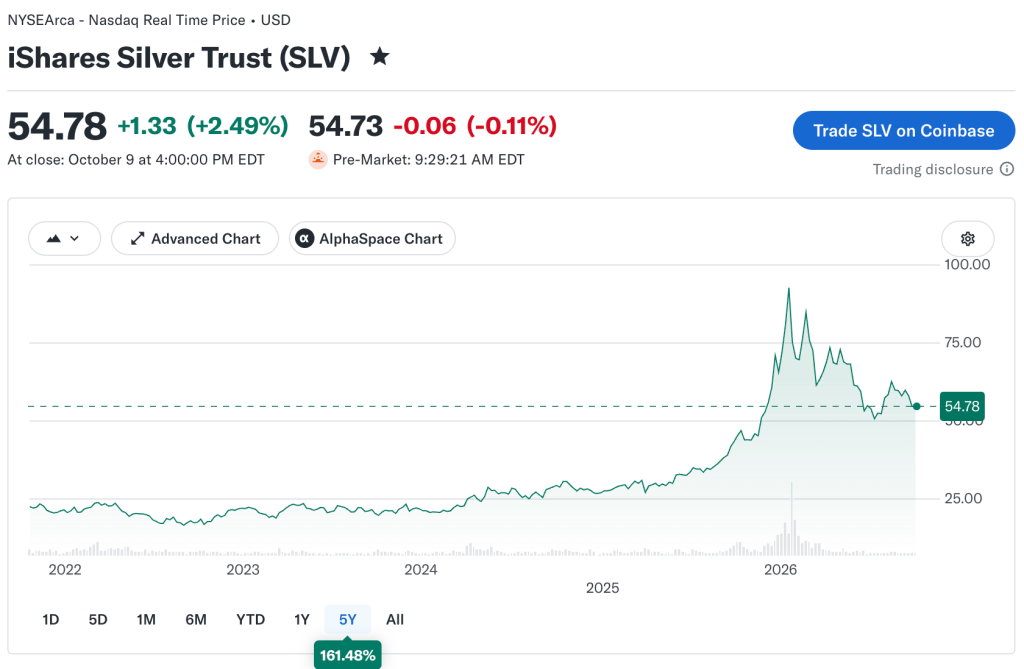
SLV is a large fund and actively traded, which makes it easy to buy or sell shares instantly without moving the market price. As of October 9, 2026, its 30-day average trading volume was approximately 15.6 million shares. The gap between what buyers offer and what sellers ask is virtually nonexistent (averaging just 0.02%).
However, the trade-off is cost: SLV’s 0.50% annual sponsor fee is higher than SIVR’s. Also, holding SLV shares doesn’t mean that you can redeem a few shares for silver bars. Physical redemption is restricted to authorized participants using large baskets.[ishares][aberdeeninvestments]
2. abrdn Physical Silver Shares ETF (SIVR): Lower-Cost Bullion Exposure
The abrdn Physical Silver Shares ETF (SIVR) also tracks the spot price of physical silver, but with an emphasis on keeping holding costs low. Like SLV, it lets investors gain exposure to the metal without managing storage or insurance.
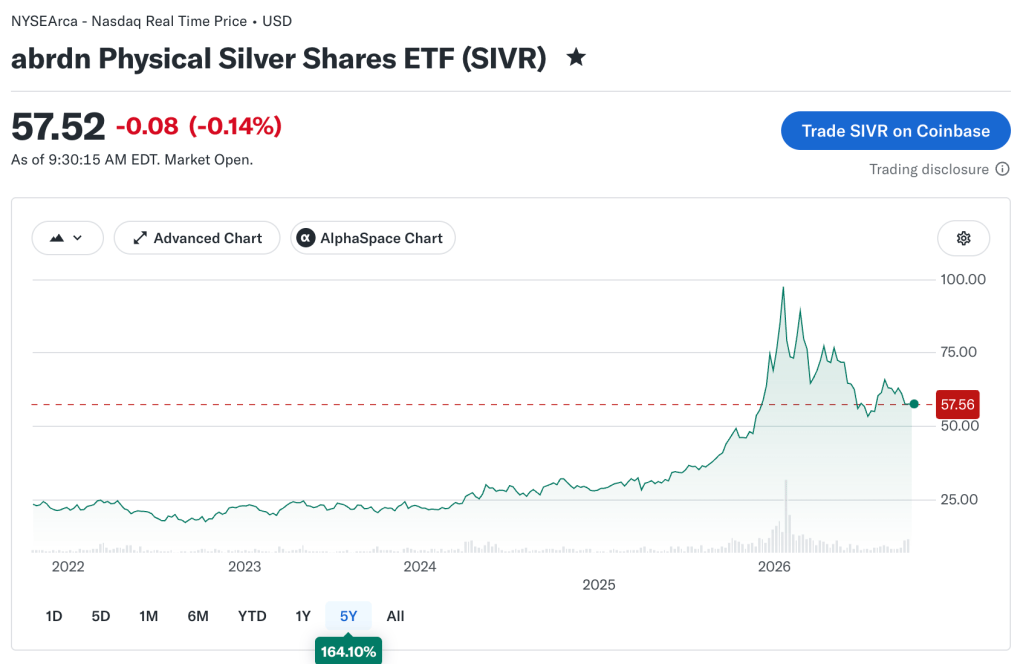
SIVR carries a lower 0.30% annual expense ratio (thanks to a fee waiver by the fund provider). For example, on a consistent $10,000 position, a 0.30% fee costs about $30 a year, compared to $50 a year under a 0.50% fee like SLV’s. The exact dollar figure fluctuates with the value of the silver held.
If low holding fees matter most—especially for longer-term positions—this discount adds up over time.
3. Sprott Physical Silver Trust (PSLV): Allocated Bullion With Structural Differences
PSLV holds silver bars that meet London Good Delivery standards, kept safe by the Royal Canadian Mint. “Fully allocated” means that specific silver bars are assigned to the trust.
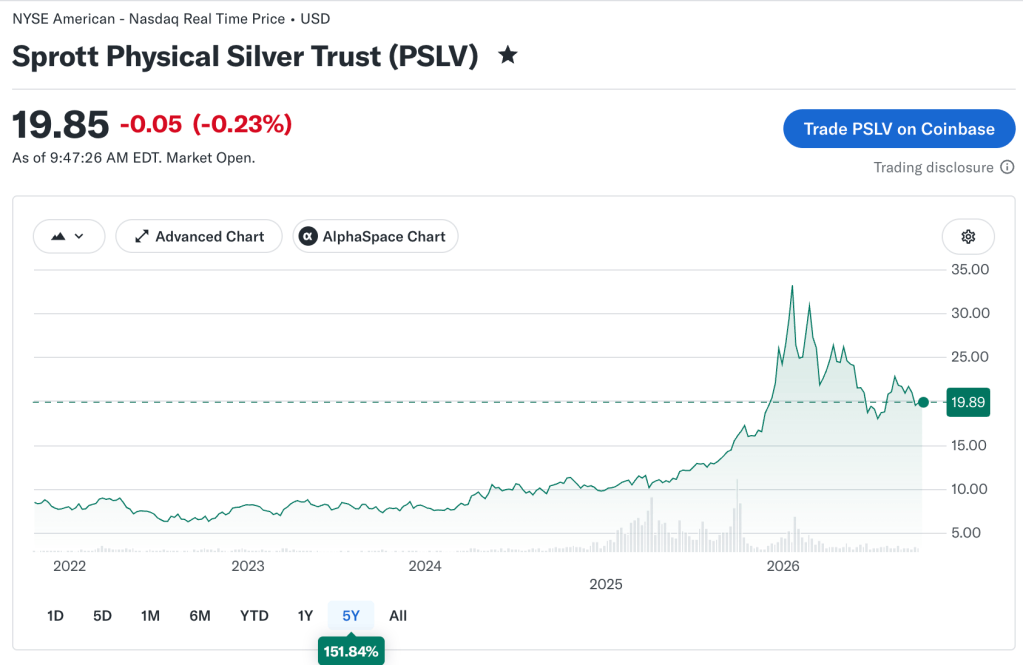
Its closed-end structure is important to note. Shares can sell for more or less than the net asset value (NAV), which is the value of the underlying assets per share. On October 9, 2026, PSLV was trading at a 4.06% discount to NAV. This discount can change and impact your returns, regardless of what happens to silver prices.
PSLV also brings tax complications for U.S. investors. Sprott calls it a passive foreign investment company (PFIC), and the tax treatment can depend on timely elections and ongoing filings. Don’t expect its tax treatment to be the same as a U.S. ETF; talk to a tax professional to understand it better.[sprott]
4. Global X Silver Miners ETF (SIL): Exposure to Mining Businesses
SIL offers access to various global silver mining companies and has a total expense ratio of 0.65%. Its index includes businesses that mine, refine, and explore for silver.[globalxetfs][assets.globalxetfs]
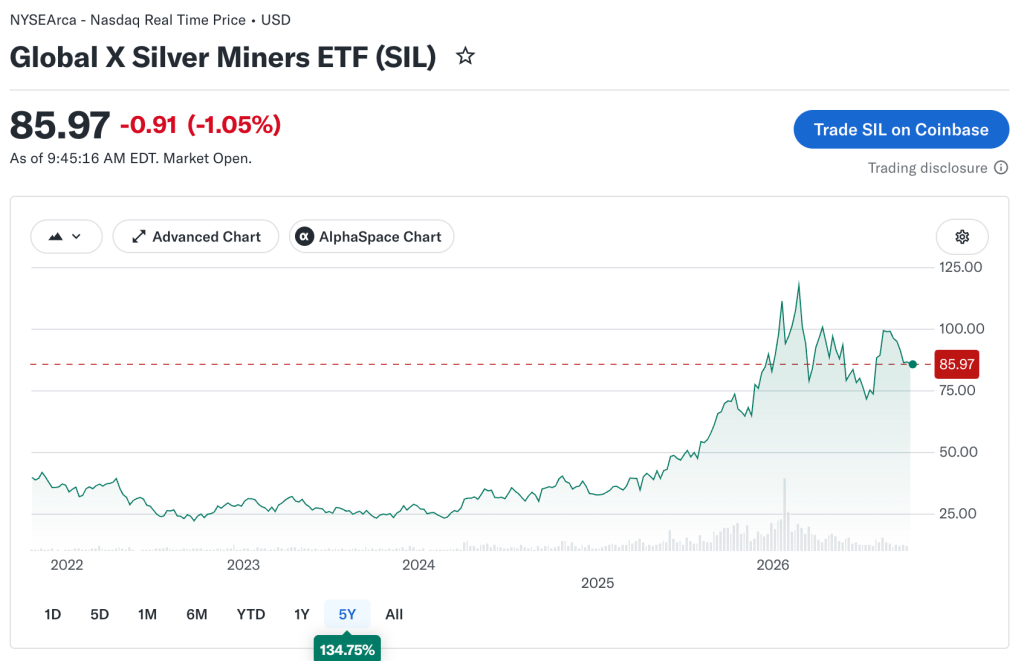
This investment is different from buying actual silver bullion. Instead, you’re investing in companies that work in the silver industry rather than owning physical silver bars.
This also means there are extra risks. Investments in silver mining can be affected by changes in production costs, silver prices, and various political or economic situations. Even if silver prices go up, these business risks still exist.[amplifyetfs]
SIL should be included when comparing mining stocks, but it is not the same as SLV or SIVR.
5. Amplify Junior Silver Miners ETF (SILJ): A Junior Mining Strategy
SILJ follows the Nasdaq Junior Silver Miners Index and has a total expense ratio of 0.69%. It includes companies involved in producing, exploring, and developing silver.
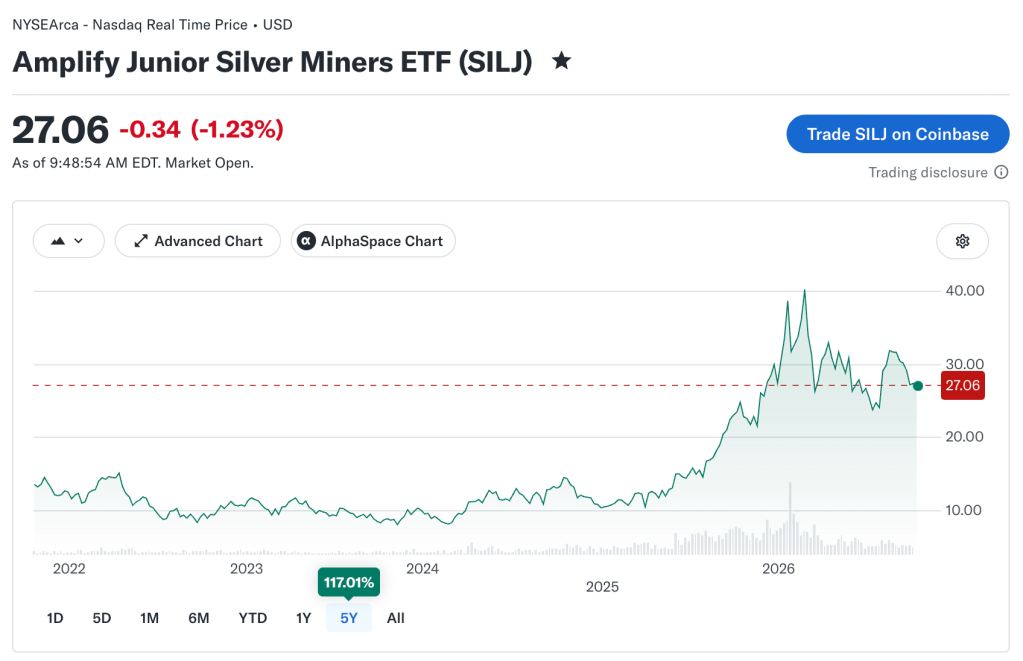
The term “junior” doesn’t mean that all the companies are small. As of September 30, 2026, Amplify’s allocation included large, mid-sized, and small companies. It’s a good idea to check the fund’s actual portfolio instead of just going by its name.
However, keep in mind that there are risks. Amplify points out that smaller companies might have less trading activity and can experience bigger price changes. SILJ is worth looking into if you’re interested in the mining sector, but it’s not a low-risk alternative to holding physical silver.
How to Compare Silver ETFs Without Overcomplicating It
Start by deciding whether you want bullion exposure or mining-company exposure. Then compare:
- Annual fees and any waivers.
- Trading volume and bid-ask spreads.
- Premiums or discounts to NAV.
- Holdings and investment structure.
- Tax requirements relevant to your account and country.
- Frequently Asked Questions
Which silver ETF has the lowest fee on this list?
SIVR has the lowest published annual fee among these five at 0.30%, reflecting its current voluntary waiver. That doesn’t establish it as the cheapest silver product worldwide.[aberdeeninvestments]
What’s the difference between SLV and PSLV?
Both hold physical silver, but PSLV is a closed-end trust with potentially significant NAV discounts or premiums and distinct U.S. tax considerations. SLV uses a different trust and creation/redemption structure.[ishares][sprott]
Do silver mining ETFs track silver prices directly?
No. SIL and SILJ own company shares. Their returns reflect mining-sector equity performance rather than simply following bullion prices.[amplifyetfs][assets.globalxetfs]
Are silver ETFs safe for beginners?
They’re accessible, but not risk-free. Silver prices can fall sharply, and mining funds add company and sector risks. Understanding the product matters more than how easy it is to purchase.[ishares][amplifyetfs]
This article is for educational purposes only and is not personalized investment or tax advice. Investments can lose value.

